# How to decimate a 3D box mesh generated by GMSH?
**URL:** https://discourse.vtk.org/t/how-to-decimate-a-3d-box-mesh-generated-by-gmsh/2699
**Category:** Support
**Created:** [February 25, 2020, 2:19pm UTC](https://discourse.vtk.org/t/how-to-decimate-a-3d-box-mesh-generated-by-gmsh/2699 "2020-02-25T14:19:01Z")
**Posts on this page:** 4
**Page:** 1
### Author:  [@duy\_duc](https://discourse.vtk.org/u/duy_duc)
#### Post date: [February 25, 2020, 2:19pm UTC](https://discourse.vtk.org/t/how-to-decimate-a-3d-box-mesh-generated-by-gmsh/2699/1 "2020-02-25T14:19:01Z")
Hi everyone
I am new to VTK.
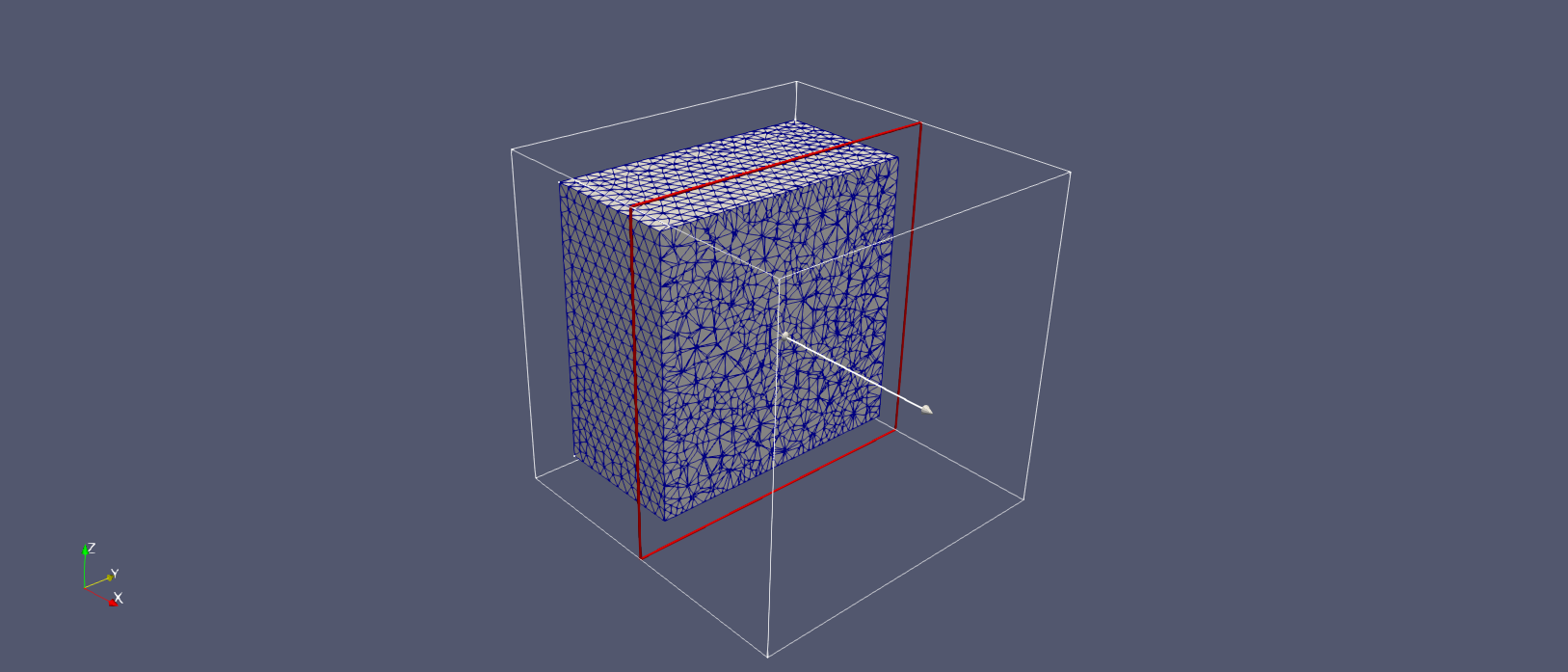
I want to decimate a box meshed with tetrahedra and generated by GMSH. I follow the example for Python [here](https://lorensen.github.io/VTKExamples/site/Python/Meshes/Decimation/).
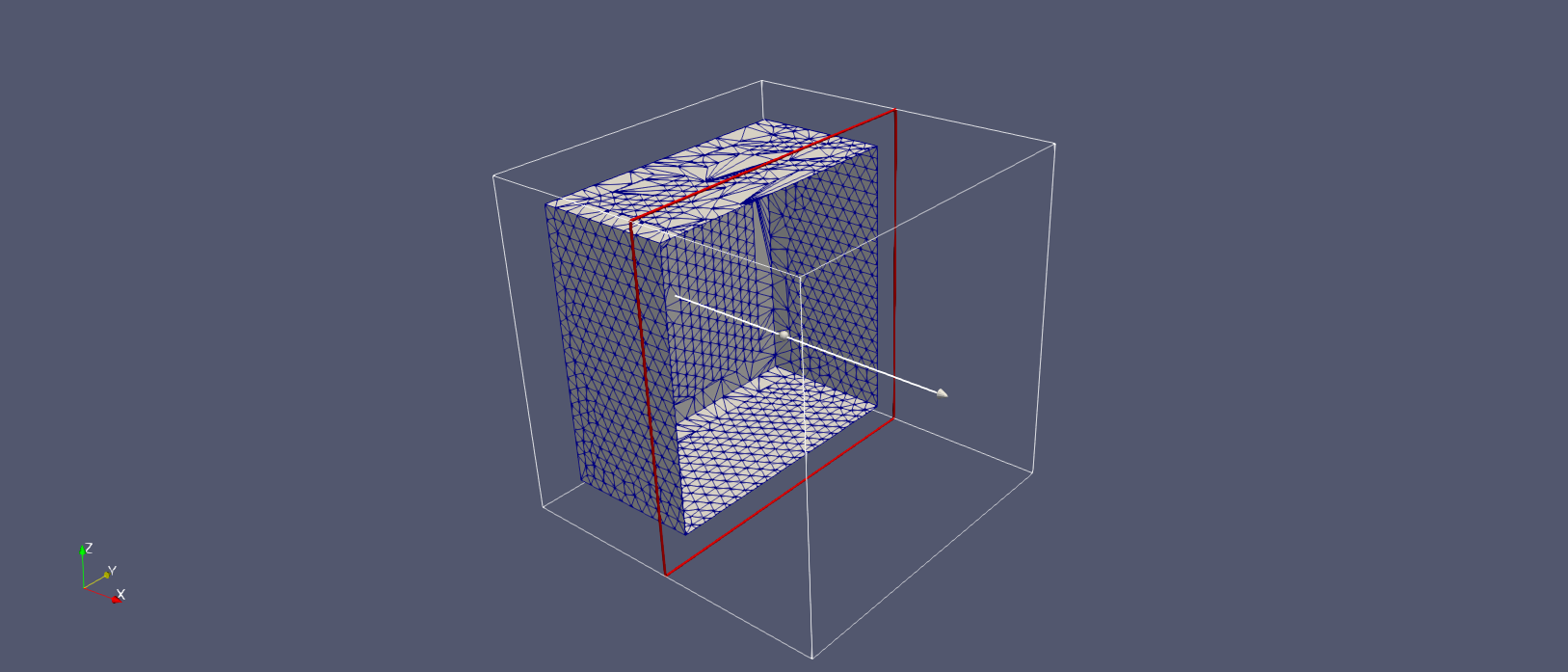
However, my decimated mesh only contain boundaries of the box and 2D triangle meshes.
Could you please help me to point out what is wrong in my code?
Thank you very much
```
from vtk import *
def unstructured_grid_to_polydata(unstructured_grid):
# Convert unstructured grid to polydata
geo_filter = vtk.vtkGeometryFilter()
geo_filter.SetInputData(unstructured_grid)
geo_filter.Update()
polydata = geo_filter.GetOutput()
return polydata
def decimate_mesh(mesh_name):
print('=== decimate ===')
print('mesh_name:', mesh_name)
head_name, tail_name = mesh_name.split('.')
# Reader reads mesh file
reader = vtkUnstructuredGridReader()
reader.SetFileName(mesh_name)
reader.Update()
# convert unstructured grid to polydata
inputPoly = unstructured_grid_to_polydata(reader.GetOutput())
print("Before decimation\n"
"-----------------\n"
"There are " + str(inputPoly.GetNumberOfPoints()) + " points.\n"
"There are " + str(inputPoly.GetNumberOfPolys()) + " polygons.\n")
# decimate
decimate = vtkDecimatePro()
decimate.SetInputData(inputPoly)
decimate.SetTargetReduction(.10)
decimate.Update()
# decimate Polydata
decimatedPoly = vtkPolyData()
decimatedPoly.ShallowCopy(decimate.GetOutput())
print("After decimation \n"
"-----------------\n"
"There are " + str(decimatedPoly.GetNumberOfPoints()) + " points.\n"
"There are " + str(decimatedPoly.GetNumberOfPolys()) + " polygons.\n")
# export decimated mesh (does not work)
#writer = vtkUnstructuredGridWriter()
#writer.SetInputData(decimate.GetOutput())
#writer.SetFileName("{}_decimated.vtk".format(head_name))
#writer.Write()
#save .vtk polydata
writer = vtk.vtkPolyDataWriter()
writer.SetFileTypeToASCII()
writer.SetInputData(decimate.GetOutput())
writer.SetFileName("{}_decimated.vtk".format(head_name))
writer.Write()
#STL writer
stlWriter = vtkSTLWriter()
stlWriter.SetFileName("{}_decimated.stl".format(head_name))
stlWriter.SetFileTypeToBinary()
stlWriter.SetInputConnection(decimate.GetOutputPort())
stlWriter.Write()
return
if __name__ == " __main__":
load_path = 'Geometry/'
mesh_name = 'box.vtk'
decimate_mesh(load_path + mesh_name)
```
---
### Author:  [@banesullivan](https://discourse.vtk.org/u/banesullivan)
#### Post date: [February 25, 2020, 8:00pm UTC](https://discourse.vtk.org/t/how-to-decimate-a-3d-box-mesh-generated-by-gmsh/2699/2 "2020-02-25T20:00:39Z")
The decimation algorithms (e.g. `vtkDecimatePro`) only work on `vtkPolyData` meshes (2D surface geometries - so the bounding surface of your volumetric mesh).
As far as I am aware, there aren’t any decimation algorithms for 3D geometries in VTK ( **to my knowledge** ).
@akaszynski might have a 3D version of the ACVD algorithm that he might be willing (😀) to upload in [PyACVD](https://github.com/pyvista/pyacvd) which works with [PyVsita](https://docs.pyvista.org) (a Python wrapper for VTK). So maybe keep an eye on PyACVD…
---
### Author:  [@banesullivan](https://discourse.vtk.org/u/banesullivan)
#### Post date: [February 25, 2020, 8:03pm UTC](https://discourse.vtk.org/t/how-to-decimate-a-3d-box-mesh-generated-by-gmsh/2699/3 "2020-02-25T20:03:41Z")
If you open an issue in [PyACVD](https://github.com/pyvista/pyacvd) then you might be likely to see that 3D algorthm added 😉
---
### Author:  [@akaszynski](https://discourse.vtk.org/u/akaszynski)
#### Post date: [February 25, 2020, 8:24pm UTC](https://discourse.vtk.org/t/how-to-decimate-a-3d-box-mesh-generated-by-gmsh/2699/4 "2020-02-25T20:24:04Z")
It’s a 3D clustering algorithm that works fairly well, but I’ve only used it internally. If there’s interest on GitHub I’ll add it.